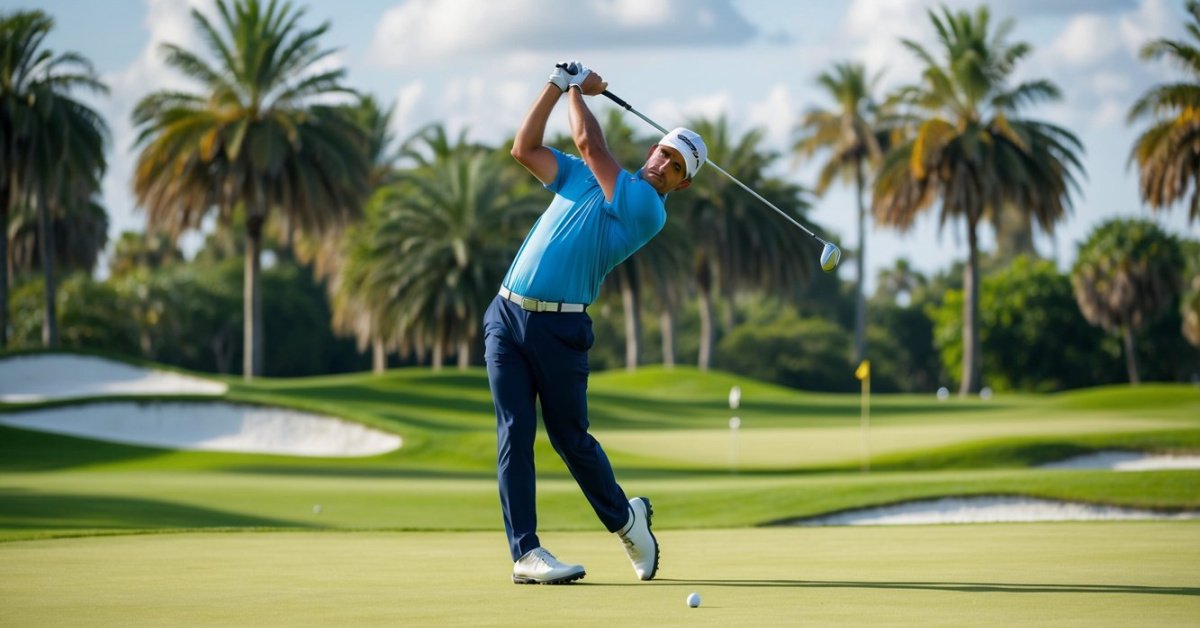
Ever feel like you’re putting all your might into your golf swing but the ball just won’t go the distance? You’re not alone. Golfers with slower swing speeds face this challenge often, but the right golf ball can make all the difference.

In this article, you’ll discover the best golf balls designed to optimize distance for players with a slower swing. Whether you’re on the hunt for a softer feel, durable design, or just want to see your ball soar further down the fairway, we’ve got you covered.
So, grab your clubs and let’s dive into the world of golf balls that promise to add that extra pep to your step—and your swing—without breaking the bank.
Understanding Swing Speed and Golf Ball Distance
Swing speed is fundamental to how far you’ll hit the ball. It’s all about the energy transfer from the club to the ball. Generally, pros have a swing speed well over 100 mph, while the average Joe’s hovers around 85 mph. If your swing speed is on the slower side, don’t sweat it – there are golf balls out there engineered to make the most of your game.
Choosing the right ball can be a game-changer. Golf balls designed for slower swing speeds often have a low compression rating, meaning they’re easier to compress upon impact, leading to more bounce off the clubface. This translates into distance even if you’re not swinging out of your shoes.
Some technical bits you should know:
- The compression of a golf ball is measured by a numerical value.
- Typically, balls with a compression rating of 80 or below are considered low compression.
- High compression balls usually rate at 90 and above.
Here’s a quick look at compression ratings:
| Golf Ball Type | Compression Rating |
|---|---|
| Low Compression | Below 80 |
| Medium Compression | 80-90 |
| High Compression | 90 and above |
In the quest for extra yards, the ball’s construction plays a vital role. Multi-layer balls with a soft outer layer tend to give you the spin control needed for precision without sacrificing the distance. They are a solid choice if you’re after both performance and feel.
Don’t forget, the weather can also affect how far your ball goes. On cold days, opt for a lower compression ball; it’ll help retain the energy transfer which can get lost when the ball hardens up in lower temperatures.


« Which Golf Ball Is Best for Distance? Discover the Top Picks
Best Golf Ball for 15-20 Handicap: Unlock Your A-Game on the Green »
Another factor to consider is the dimple pattern of your golf ball. Dimples are designed to decrease air resistance and enhance lift. The right pattern can add precious yards to your drive and improve the ball’s stability in windy conditions.
Understanding these aspects of golf ball design empowers you to choose a ball that compensates for your slower swing speed and helps you hit it farther. Remember, it’s not just about power – it’s about smart choices that work with your unique swing. Keep these insights in your bag and you’ll be set to optimize your distance on the fairway.
Factors to Consider when Choosing a Golf Ball for Slow Swing Speed
As you navigate the sea of golf ball options available, it’s critical to pinpoint the factors that will boost your performance with a slow swing speed. Delve into the technical aspects and prioritize what’ll work best for you.
Compression Rating
The first thing to look at is the ball’s compression rating. Balls with low compression are engineered to be more forgiving with slower swing speeds. They compress easily at impact, which translates to greater distance even if you’re not hitting it with the force of a tour pro.
- Look for ratings below 70 for the softest feel.
- Balls rated between 70 and 90 offer a good balance for moderate swing speeds.
Ball Construction
Next up, consider the ball’s construction. Multilayer balls are typically designed for players with higher swing speeds, while two-piece balls are more suitable for your slower swing.
- Two-piece balls: Durable and optimized for distance.
- Multilayer balls: Offer more spin control, but may not be ideal if your swing speed is on the lower side.
Dimple Pattern
Dimples play a crucial role in determining how air flows around the ball, affecting its trajectory and stability. You’ll want dimple patterns that promote a penetrating flight, helping you gain those extra yards.
- Shallower dimples can lead to lower ball flight, ideal for maximum roll.
- Uniform dimple patterns contribute to balanced flight characteristics.
Weather Conditions
Never underestimate the impact of weather conditions on your golf ball’s performance. In cooler temperatures, a lower compression ball can make a world of difference in retaining energy transfer to the ball.
Remember, experimenting with different golf balls can be enlightening. Don’t shy away from trying out rounds with multiple ball types. Observing how they react to your individual swing will give you invaluable insight into making the perfect choice for your game. Keep tabs on how each ball performs under various conditions and take note of which ones help you achieve the longest drives. This hands-on approach could be the key to unlocking extra distance off the tee.
The Top Golf Balls for Maximum Distance with Slow Swing Speed
As you delve deeper into finding the ideal golf ball that complements your slow swing speed, it’s crucial to identify which ones stand out in terms of distance. When your swing doesn’t generate high-speed impact, these select balls can help bridge the gap.
Titleist DT TruSoft is renowned for its exceptional distance despite a lower swing speed. The ball’s low compression core is designed for reduced spin, which aids in achieving longer flights off the tee. You’ll also appreciate how the TruSoft feel minimizes feedback on mishits.


Move over to the Callaway Supersoft, which many golfers swear by for its ultra-low compression. The HEX Aerodynamics reduce drag and enhance lift, so your shots stay airborne longer – a clear advantage on those long par 5s. Plus, the soft feel around the greens might just shave a few strokes off your short game.
Don’t overlook the Wilson Staff Duo Soft+, another gem for slow swingers. This ball offers a super-low 35 compression rating and a VelocitiCOR™ that’s all about maximizing distance through advanced materials. You’ll notice how the ball jumps off your clubface, even when you’re not swinging out of your shoes.
Here’s a quick rundown of these top distance-enhancing golf balls for slow swing speeds:
| Golf Ball | Compression | Key Feature |
|---|---|---|
| Titleist DT TruSoft | Low | Reduced spin for longer flight |
| Callaway Supersoft | Ultra-Low | HEX Aerodynamics for extended carry |
| Wilson Staff Duo Soft+ | Super-Low | VelocitiCOR™ for distance |
A range session with each of these could reveal your new go-to ball. Remember to pay attention to how each responds in varying conditions – after all, adaptability on the course can be just as important as pure distance. So next time you’re out there, test out these contenders and observe how they contribute to your performance on those lengthy courses.
Comparing the Softest Golf Balls for Added Distance
When you’re in search of that extra edge on the course, particularly with a slow swing speed, delving into the realm of the softest golf balls can reveal some hidden gems that provide that much-sought-after increase in distance.
First off, let’s talk about the Callaway Chrome Soft. This ball is a marvel for those looking to maintain softness without sacrificing distance. It boasts a Dual SoftFast Core that aids in energy transfer, especially for players with a moderate swing speed. The graphene-infused core – yes, that’s right, the same material found in high-tech applications – adds durability and performance.
The Titleist AVX arguably earns its spot in your lineup with its low compression rating coupled with a high-speed core. It’s designed for golfers like you who appreciate a softer feel but don’t want to give up yards off the tee. The urethane cover helps with not only distance but also with remarkable control around the greens – something you can’t afford to overlook.
Onto a fan favorite, the Srixon Soft Feel. Its name says it all. For a swing that isn’t breaking the speedometer, this ball offers a reduced drag and a high launch, thanks to its 338 Speed Dimple pattern. With these balls, you’ll notice your shots carrying farther despite your moderate swing tempo.
Here’s a quick breakdown of their notable features:
| Golf Ball | Core Technology | Cover Material | Dimple Pattern | Special Feature |
|---|---|---|---|---|
| Callaway Chrome Soft | Dual SoftFast Core with Graphene | Urethane | Hex Aerodynamics | Enhanced Energy Transfer |
| Titleist AVX | Low Compression, High-Speed Core | Urethane | Tetrahedral Catenary | Low Flight Trajectory |
| Srixon Soft Feel | Energetic Gradient Growth Core | Ionomer | 338 Speed Dimple | Soft Center |
Remember, the best way to see which golf ball complements your game is to hit the course and put them to the test. Notice how they react to full swings, approach shots, and putts. Each ball’s performance on the green may sway your preference as much as its flight off the tee. After all, what’s more satisfying than watching your ball soar off into the distance with ease?
The Most Durable Golf Balls for Consistent Distance
When your swing speed isn’t breaking any records, durability becomes a key factor in selecting a golf ball that maintains consistent distance over time. A resilient golf ball doesn’t just last longer, it also ensures that the properties affecting distance remain intact round after round.
Ionomer covers are your ally in this pursuit. These covers are tougher than urethane and resist cuts and scuffs, allowing the ball to perform consistently despite frequent use. Ionomer-covered balls like the Titleist DT TruSoft and the Callaway Supersoft boast a blend of durability and distance, which is ideal for your slower swing speed.
| Ball Model | Cover Material | Compression | Distance Potential |
|---|---|---|---|
| Titleist DT TruSoft | Ionomer | Low | High |
| Callaway Supersoft | Ionomer | Low | High |
What’s more, both these models feature low compression cores. Low compression equals less deformation on impact, meaning you’ll get more efficient energy transfer from club to ball – directly translating to distance on the course. Yet, it’s not just about the core or cover; the overall ball construction matters too.
Two-piece golf balls usually hit the sweet spot for players with slower swing speeds looking for durability. Without the extra layers found in multi-layer balls, two-piece designs are simpler, sturdier and focus directly on maximizing distance and ensuring durability.
Remember, extensive scuffs can alter the ball’s aerodynamics, resulting in unpredictable flight patterns and distances. By choosing a ball that stands up to the wear and tear, you’re setting yourself up for more predictable and consistent results with every drive.
It’s worth investing the time to test out these durable options during your practice rounds. Keep track of how the ball performs after several hits—does it maintain its original flight characteristics? Is the distance you’re achieving consistent? These observations will guide you toward the golf ball that will serve you best over the long haul.
Affordable Options for Golf Balls that Maximize Distance
When you’re dealing with a slow swing speed, finding a golf ball that doesn’t break the bank but still gives you the distance you need can feel like a game in itself. Luckily, there are options out there that cover both bases—price and performance.
To start, let’s talk about Wilson Staff Distance. These are not only friendly on your wallet but also designed to fly far, even when your swing isn’t the fastest. The low compression core in these golf balls helps to maximize energy transfer, crucial for gaining those extra yards off the tee.
Then there’s the Pinnacle Soft. These balls are another great choice for slower swingers looking for a distance edge without the steep price tag. Pinnacle Soft balls offer a low compression core paired with a durable, soft cover that provides a comfortable feel—ideal for those long afternoons on the course.
Here are some top choices known for providing excellent value:
- Wilson Staff Distance
- Pinnacle Soft
- Nitro Ultimate Distance
- Top Flite XL Distance
| Ball Name | Compression | Cover Type | Price Range |
|---|---|---|---|
| Wilson Staff Distance | Low | Ionomer | $ |
| Pinnacle Soft | Low | Ionomer | $ |
| Nitro Ultimate Distance | Medium | Ionomer | $ |
| Top Flite XL Distance | Medium | Ionomer | $ |
Note: Prices may vary based on retailer and quantity purchased.
Don’t overlook the Nitro Ultimate Distance either. These balls are designed with an aerodynamic dimple pattern that reduces drag and promotes a stable, long flight. And at their price point, they’re kind to your budget while still enhancing your game.
The Top Flite XL Distance balls are another staple in the value category. Known for their distance-first philosophy, these balls are a solid pick if you’re prioritizing pure yardage on a budget.
Conclusion
Frequently Asked Questions
What is the best golf ball for a slow swing speed?
For slow swing speeds, it’s best to use low compression golf balls like the Wilson Staff Distance, Pinnacle Soft, or Nitro Ultimate Distance, which are designed to maximize distance for slower swingers.
How does compression rating affect golf ball selection?
The compression rating of a golf ball impacts how the ball reacts to impact. Lower compression golf balls are better for slow swing speeds as they require less force to compress and thus travel farther.
What should I look for in golf ball construction?
When selecting a golf ball, look for those with a durable cover and a low compression core, which help in getting more distance out of slower swing speeds.
Why is dimple pattern important for slow swingers?
The dimple pattern on a golf ball affects its aerodynamics. A proper dimple pattern can help reduce drag and increase lift, resulting in longer flight time and distance for slow swingers.
What are some affordable golf ball options for slow swing speeds?
Affordable options for golfers with slow swing speeds include the Wilson Staff Distance, Pinnacle Soft, Nitro Ultimate Distance, and Top Flite XL Distance, known for their performance and value.