Finding the right golf ball can be as crucial as the perfect swing, especially if you’re playing with a 10 handicap. You’re at a sweet spot where the right equipment can make a significant difference in your game.

Factors to Consider when Choosing a Golf Ball
As you dial in on the perfect golf ball for your 10 handicap, there are several key elements you should take into account. Each factor can profoundly affect how the ball behaves on the course, influencing everything from trajectory to spin.
Construction is the starting point. Golf balls are made from a variety of materials, with most featuring a multi-layer design. The more layers a ball has, the more it’s engineered for advanced players who can exploit the nuanced performance characteristics. A three-piece golf ball might just be your sweet spot, providing a balance between distance and control.
Next, consider the compression rate of the ball. Typically, balls with higher compression are favored by golfers who have faster swing speeds. If your drives regularly clear 250 yards, a high-compression golf ball could enhance your play. However, mid-compression balls tend to suit a wide range of swing speeds and may offer the versatility you need.
The dimple pattern also plays a vital role. It affects how the air flows around the ball during flight, impacting lift and drag. Unique dimple designs can lead to different flight patterns and distances. It’s worth sampling a few to see which aligns with your style.
Don’t overlook the feel of the ball around the greens. Your short game relies on finesse, and if the ball feels too hard or too soft on impact, it will throw off your touch around the pin. A ball that provides a responsive feel for chip shots and putts can give you that edge when you’re trying to save par.
Spin is another crucial aspect, especially for approach shots. A ball that offers controlled spin can help you attack the flag and stick your landings. If you’re adept at shaping shots or prefer a ball that can cut through the wind on gusty days, prioritizing spin rates might be the way to go.
Always remember, the right golf ball complements your natural abilities and suits your specific needs on the course. Testing out various options during practice rounds will give you invaluable insights into how each type of ball performs under real conditions. Keep these key points in mind and you’ll be well on your way to optimizing your game.
Understanding the Characteristics of Golf Balls
Golf balls may look similar at a glance, but subtle differences can significantly impact your game. If you’re a golfer with a 10 handicap, paying attention to these nuances is essential for shaving off strokes.


Construction is Key
« Best Golf Ball Around the Green: Are You Missing Out on Ball 5’s Magic?
What Golf Ball is Best for a Slow Swing Speed? Unlock Distance & Accuracy Secrets »
Golf ball construction varies widely, each designed for different performance attributes:
- Two-piece balls are built for durability and distance, ideal for golfers who prioritize a long, straight shot.
- Multi-layer balls offer a nuanced game, with an emphasis on control and spin around the greens.
Choosing the right construction enhances your strengths and supports your weaknesses on the course.
Compression Rate Matters
The compression rate of a golf ball is how much it deforms under the golfer’s swing speed:
| Swing Speed (mph) | Compression Rating | Suggested Ball Type |
|---|---|---|
| 70 – 85 | Low | Soft Compression |
| 85 – 95 | Medium | Mid Compression |
| 95 and above | High | High Compression |
As a rule of thumb, faster swing speeds require higher compression for optimal distance and feel.
Dimple Pattern and Flight
Dimple pattern influences aerodynamics and, consequently, the flight of the ball:
- Uniform dimple patterns aim for consistent trajectory.
- Varying sizes and shapes of dimples can reduce drag and enhance lift.
Balls with more dimples often produce a more stable flight, which could be a critical factor in windy conditions.
Feel and Control
Feel is subjective but vital:
- A softer ball tends to provide better feedback, particularly in your short game.
- A firmer ball might produce less spin, catering to golfers who want straighter shots.
Assessing the feel is best done through personal experience, ensuring it matches your touch and what you’re most comfortable with.
Remember, practicing with various golf balls during your rounds gives invaluable insights. Monitor how each ball’s characteristics affect your game and you’ll discover the optimal ball to match your 10 handicap status.
Top Golf Ball Brands for 10 Handicap Players
When you’re striving for consistency and top performance on the course, selecting a golf ball from a reliable brand can make all the difference. As a 10 handicap player, you’ve got a solid game, and it’s key to pair your skills with a golf ball that complements them.



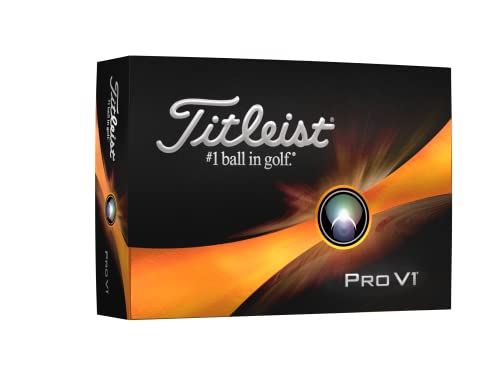
Titleist Pro V1 and Pro V1x balls are practically synonymous with high-quality golf performance. They’re engineered for serious golfers who demand precise control and exceptional distance. While the Pro V1 provides a slightly softer feel and is optimized for lower spin in your long game, the Pro V1x is designed to yield a higher trajectory and more spin for greenside control.
Next in line, Callaway Chrome Soft balls might catch your interest if you’re after an ultra-soft feel without sacrificing the distance. With Graphene-infused Dual SoftFast Core, they offer high-levels of control while allowing you to maintain a soft feel, which can be advantageous when shooting for those delicate putts and precise short games.
For those keen on innovation, the TaylorMade TP5 and TP5x models are not to be overlooked. Their 5-layer construction provides a unique combination of distance, spin, and feel. While TP5x delivers a higher flight compared to TP5, both are built for complete tee-to-green performance and are a favorite among players who prioritize shot-shaping abilities.
Moreover, don’t dismiss the Srixon Z-Star and Z-Star XV. Designed with an advanced dimple pattern to improve aerodynamic performance, these balls offer excellent spin control and a softer feel, ideal for fine-tuning your short game.
Remember to consider these key areas when selecting your ideal golf ball:
- Distance and trajectory
- Spin rates and control
- Compression and feel
- Construction and durability
Testing different brands during your practice rounds is the most effective way to determine which golf ball is the right match for your playing style. Each option has the potential to harmonize with your game, enhancing your performance and ultimately, lowering your handicap even further.
Performance and Spin Rate: What to Look for in a Golf Ball
When you’re eyeing improvements to your game, understanding the performance metrics of a golf ball is critical. Spin rate is a defining factor for ball behavior on the course and varies significantly between models. High spin golf balls tend to stay in the air longer and can give better control on the greens, letting you shape shots more effectively.
But let’s break it down. For you, a 10 handicap golfer, it’s all about finding the sweet spot. You’ll want a ball that offers a balanced spin rate—one that complements both your long game and short game. In the long game, excessive spin can lead to hooks or slices, reducing accuracy. Conversely, around the greens, a higher spin rate can grant the precision needed to stop the ball close to the pin.
In search for the perfect ball, you might encounter terms like ‘low spin’, ‘mid spin’, and ‘high spin’. Generally, mid to high spin golf balls are typically best for your skill level. They promote a penetrating ball flight and can help to minimize the side spin that causes errant shots.
Moreover, the performance off your clubface also depends on the compression of the golf ball. Higher compression balls, which require a faster swing speed, can lead to a lower spin rate off the tee but potentially more control when hitting irons and wedges.
It’s not just about the numbers though; feel is just as important. When chipping and putting, a ball with a softer feel can provide a better touch, useful for those delicate shots where precision is key.
To navigate the options, here’s what you might consider:
- For a long game with optimal control, seek mid spin rate golf balls.
- If your focus is on greenside control and finesse shots, high spin golf balls could be more your style.
- Always account for your usual swing speed and choose a compression rate accordingly.
Remember, there’s no one-size-fits-all. Finding the right combination of performance and spin rate involves a bit of trial and error. Take advantage of demo days at your local golf course or invest in a sleeve of different balls to see firsthand how they perform for your game. It’s the best way to dial in the perfect golf ball that aligns with your goals on the course.
Best Golf Ball Options for 10 Handicap Players
As you refine your skills and edge closer to single digits, having the right golf ball becomes paramount. At a 10 handicap, you’re skilled enough to notice the nuances between different models and how they impact your play.
Firstly, let’s talk about the Titleist Pro V1. It’s a tour favorite for a reason. With superb distance and a consistent flight, it’s an ideal match for players who are serious about lowering their handicap. Its urethane cover provides excellent green-side control, which can be a game-changer for your scoring.
Next up, the Callaway Chrome Soft stands out for its Dual SoftFast Core, which aids in achieving high launch and low spin on your long shots while still providing the touch you need around the greens. If you’re looking to add some control on your approach shots without sacrificing distance, give this ball a swing.
Moving onto the TaylorMade TP5 and TP5x series, these balls are a marvel of engineering with their 5-layer construction. The TP5 offers a softer feel and more spin for enhanced control, whereas the TP5x delivers a firmer feel with high launch and low spin. Depending on your preference for feel and trajectory, one of these could fit your pockets and play style perfectly.
For those who value a balance between distance and control, the Srixon Z-Star and Z-Star XV can deliver just that. They are designed to maximize energy transfer for greater distance while maintaining a soft feel for precision around the greens.
Remember, testing is crucial. Don’t hesitate to grab a sleeve of each of these options and take them for a round. Pay attention to how they perform for you from tee to green including how they fare in different conditions like the wind and wet turf.
Finding the best golf ball for your game is a personal journey. You’re not just buying a brand; you’re adopting a performance partner that can help you shave strokes off your rounds. Keep your swing and play style in mind, and you’ll find the ball that not only matches but enhances your game.
Conclusion
Frequently Asked Questions
What should players with a 10 handicap consider when choosing a golf ball?
When selecting a golf ball, 10 handicap players should consider the ball’s construction, compression rate, dimple pattern, and overall feel to match their swing and style of play.
What are some top golf ball brands recommended for 10 handicap players?
Recommended golf ball brands for 10 handicap players include Titleist Pro V1 and Pro V1x, Callaway Chrome Soft, TaylorMade TP5 and TP5x, and Srixon Z-Star and Z-Star XV.
Why is the urethane cover important in the Titleist Pro V1?
The urethane cover of Titleist Pro V1 is important because it provides excellent green-side control, allowing for better performance in short game shots.
How does the Callaway Chrome Soft’s Dual SoftFast Core benefit players?
The Dual SoftFast Core in the Callaway Chrome Soft helps to achieve a high launch and low spin off the driver, which can enhance distance and control.
What is unique about the construction of the TaylorMade TP5 and TP5x golf balls?
TaylorMade TP5 and TP5x golf balls feature a 5-layer construction that allows players to choose between different feel and trajectory preferences, catering to individual play styles.
How important is it to test different golf balls for a 10 handicap player?
It is crucial to test different golf balls as it allows a 10 handicap player to find the one that best complements their swing dynamics and play style, potentially improving their overall game.