You’re standing on the fairway, ready to make your shot. In your hand, a Vice Golf ball or a Titleist Pro V1—two heavy hitters in the golf ball game. But which one’s going to give you the edge you need?

Let’s dive into the world of premium golf balls, where every dimple and layer can affect your game. You’ll find out if the Vice balls, known for their value, can really stand toe-to-toe with the legendary performance of the Pro V1s.
Vice Golf Ball: An Affordable Option
When you consider the budget without compromising the quality of your game, Vice Golf balls might just be your ace in the hole. These balls have gained a reputation for delivering premium performance at a much more affordable price point compared to the Pro V1. But don’t let the price tag fool you; Vice Golf balls are designed to rival the market leaders.
Emerging in the market as a direct-to-consumer brand, Vice Golf has cut out the middleman, allowing savings to be passed on to you. They offer a variety of options, each tailoring to different aspects of the game. Whether you’re looking for more control around the greens or seeking that extra distance off the tee, there’s likely a Vice ball that fits your needs.
Performance on the Course
While you are dissecting your performance on the links, consider the Vice Pro and Pro Plus models, which are specifically engineered for low-handicap players. These balls feature a cast urethane cover—the same material used in the Pro V1—which is known for its soft feel and high spin around the greens. It’s impressive how Vice manages to keep such essential features while maintaining an accessible price point.
Dimple Design and Durability
The aerodynamics of a golf ball play a crucial role, and Vice has put significant effort into its dimple design to ensure stable flight and good wind resistance. These are key factors you don’t want to sidestep when considering a switch. Plus, durability is another important aspect – and Vice does not disappoint here either. Their balls are made to last, which means fewer balls lost to wear and tear over time.
As you tally up the savings and the scorecard, take a moment to appreciate the balance Vice strikes between affordability and performance. It’s rare to find a golf ball that doesn’t force you to choose one over the other. Giving these a try might just give you the edge you need without breaking the bank.
Titleist Pro V1: The Gold Standard
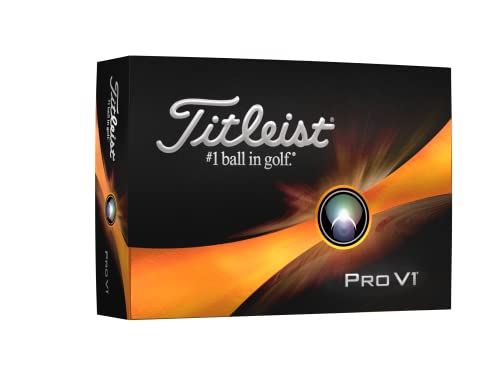
When you’re out there on the course, striving for that perfect shot, you want a golf ball that won’t let you down. Enter the world-renowned Titleist Pro V1. It’s not just a golf ball; it’s a benchmark for performance and quality in the industry. Titleist has fine-tuned the Pro V1 to deliver a consistently exceptional experience for golfers like you, pairing superb distance with a very soft feel.
Titleist’s Pro V1 has been the choice ball of numerous tour professionals, winning countless tournaments and accolades over the years. With such a track record, it’s clear why it holds the reputation as the gold standard in golf balls. It features a three-piece multilayer construction, which maximizes distance, spin, and control, a dream for skilled golfers who rely on precision and predictability from their equipment.


« Best Golf Ball for the Average Player: Top 5 Picks to Enhance Your Game
Best Golf Ball Off The Tee Golf Digest: Unlock Superior Feel & Control »
The Pro V1’s urethane elastomer cover is not only durable but also provides excellent greenside control, ensuring that your approach shots behave exactly as you expect. The ball’s 352-dimple design helps to reduce air resistance, allowing a penetrating ball flight that is invaluable in windy conditions.
You’ll notice the performance benefits of the Pro V1 particularly on your long game. Its advanced technology allows for lower long game spin and consistent flight, an essential component in finding those extra yards off the tee. A comparison of some key traits between the Vice Golf balls and the Pro V1 might look something like this:
| Feature | Vice Golf Balls | Titleist Pro V1 |
|---|---|---|
| Price | More Affordable | Premium |
| Dimple Design | Advanced | 352 Tetrahedral |
| Construction | Varied Options | 3-Piece Multilayer |
| Tour Usage | Growing Popularity | Widely Used |
| Feel | Soft to Firm | Very Soft |
| Durability | Strong | High |
Whether it’s the soft drop-and-stop greenside control or the consistent distance on the fairway, the Pro V1 remains the top choice for players who demand the best from their gear. As a low handicapper, you’ll appreciate how it complements your advanced playing style, providing confidence with every swing.
Construction and Design of Vice Golf Balls
As you delve into the technicalities of Vice Golf balls, you’ll notice that they too boast a sophisticated design aimed at providing an excellent blend of distance and accuracy. Much like the Pro V1, Vice balls are engineered with a multilayer construction. The core, mantle, and cover layers are each designed to fulfill a specific role during your round of play.
Vice Pro series, for instance, features a three-piece construction similar to the Pro V1. It has a cast urethane cover, which is durable and offers a decent amount of greenside control. The S2TG technology in the cover provides a consistent ball flight and adds to the ball’s overall feel.
Moreover, the Vice Pro Plus kicks it up a notch for players like you, who have a lower handicap and faster swing speeds. With its four-piece construction, it promises even more precise control and a lower trajectory, which often is key to scoring well under windy conditions.
As for the dimple design, Vice offers a variety of patterns across its range. For example, the Vice Pro Soft features a 318-dimple design, which is optimized for players with lower driver speeds looking to reduce the ball’s drag and enhance the lift.
Each ball in the Vice catalogue is designed with a purpose, whether it’s the Tour-level performance of the Pro series or the more budget-friendly Drive balls. Some of the notable features include:
- High Energy Speed Core (HESC) for increased ball speed
- Dual casing in the Vice Pro Plus for extra distance and stability
- KIL putter line on the Vice Pro Plus for better alignment
While each model targets specific skill sets and player requirements, the variety ensures that you can find a Vice ball that fits your game without compromising the quality of construction or design. Keep in mind that Vice’s offerings are generally priced lower than the Pro V1, which makes them a competitive option if you’re looking to balance performance with cost.
Construction and Design of Titleist Pro V1
When you’re out there on the course, seeking to shave off a few strokes, knowing the intricacies of your golf ball can make a substantial difference. Titleist Pro V1 balls are revered in the golfing world, and their design is a big reason why.


Let’s dive into what makes the Pro V1 a standout choice. These balls boast a three-piece construction that’s engineered to deliver consistency in flight and performance. At their core, you’ll find a solid 2.0 ZG Process Core, designed to maximize distance without sacrificing feel. This core is the heart of the Pro V1, providing the power needed for those impressive drives.
Wrapping around the core is a casing layer made of ionomeric material, adding speed and controlling spin, particularly with long game shots. This intermediary layer is crucial, fine-tuning the ball’s performance and reacting differently based on the force of your swing.
What’s truly remarkable about the Pro V1 is its soft urethane elastomer cover. This layer is where the magic happens with your short game – it’s all about control and spin. The material is exceptionally durable and gives you the control you crave around the greens, be it a chip, pitch, or flop shot.
The ball’s surface is dotted with a Tetrahedral Dimple Design – 352 dimples, to be exact – which works in unison with the other layers to provide a penetrating, consistent ball flight. This meticulous dimple pattern is the result of extensive aerodynamic testing and helps the Pro V1 cut through the wind, holding its line and ensuring your shots stay true to their intended path.
| Feature | Description | Benefit |
|---|---|---|
| 2.0 ZG Process Core | Solid core design | Enhances distance and feel |
| Ionomeric Casing Layer | Adds speed and spin control | Optimizes performance for long game shots |
| Urethane Elastomer Cover | Soft and durable | Improved control and spin around greens |
| 352 Tetrahedral Dimples | Engineered pattern for flight consistency | Stable, penetrating ball flight |
Performance Comparison: Distance and Control
When you tee up with a Vice Golf ball, you’re likely to notice that your drives have a robust, satisfying feel off the club face. The High Energy Speed Core is designed to optimize energy transfer, providing you with greater distance on your long shots. Whether you’re wielding a driver or a long iron, Vice balls aim to deliver the extra yards you’re seeking. Yet, it’s not just about raw power; the structured dimple design helps maintain a stable flight path, even in windy conditions.
Transitioning to the greens, control is paramount, and here’s where Vice’s offerings flex their muscles. The S2TG technology in the urethane cover means a softer feel and enhanced spin, giving you the finesse you need for those critical approach shots. This precise spin control is especially noticeable when you’re within scoring range, ensuring you can attack pins with confidence.
Let’s pivot to the Pro V1. Titleist has long set the standard for distance and control, and their Pro V1s are no different. With the solid 2.0 ZG Process Core, they’re engineered for consistent distance while maintaining a low, penetrating ball flight. The ionomeric casing layer isn’t there just for show—it’s a key player in achieving long game spin reduction, an essential element for control.
Around the greens, Pro V1s demonstrate their worth with their soft urethane elastomer cover. This isn’t simply about soft landing; it’s about giving you the stopping power and spin you need to get up-and-down from anywhere. The Pro V1’s Tetrahedral Dimple Design isn’t merely for aesthetics—it’s precision-crafted for a consistent ball flight, which is critical when playing in variable weather conditions.
When you dissect the performance aspects of these golf balls, it boils down to what type of player you are and the nuances of your game. Both Vice and Pro V1 have unique attributes that cater to different styles of play, but they’re united in their mission to give you distance and control where it counts the most. You’ll find both brands in the bags of discerning golfers who understand that choosing the right ball is as strategic as selecting the right club.
Performance Comparison: Spin and Feel
When you’re zeroing in on the green, the spin and feel of your golf ball can make all the difference. That’s where the construction and cover materials of Vice Golf balls and Titleist Pro V1s come into sharp focus.
Vice balls, with their S2TG technology in the urethane cover, offer a decisive feel and excellent spin rates. That stickiness you feel when your wedge compresses into the ball isn’t by chance; it’s by design. Their cast urethane cover is created to give you that tour-level interaction between the clubface and the ball, resulting in a responsive touch around the greens. It’s not just about sticking it close; it’s about playing the spin your shot demands—whether that’s checking up fast or releasing to the pin.
On the other side, the Titleist Pro V1 knows how to speak your language when it comes to greenside control. Its soft urethane elastomer cover is almost like having a secret weapon in your bag. Picture your lob wedge making contact and launching the ball high, with that satisfying grip as it lands, sitting obediently near the pin. That’s the Pro V1 difference—consistency and control that instills confidence regardless of whether you’re facing a delicate pitch or a daunting bunker shot.
When comparing spin on full shots, the numbers can paint a compelling story. You’ll notice that Pro V1s tend to have a markedly higher spin rate with long irons, fostering that piercing ball flight that stays true to the target. However, Vice balls aren’t lagging far behind—what they lack in comparative spin, they compensate with a reassuring feel and control, letting you attack pins with gusto.
| Ball Type | Iron Spin Rates | Wedge Spin Rates |
|---|---|---|
| Vice Golf Balls | Moderate | High |
| Titleist Pro V1 | High | Very High |
Remember, the ideal spin and feel are often subjective, influenced by your unique playing style and the conditions on the course. Whether you’re after the tactile precision of Vice or the spin-reliant approach with Pro V1, it’ll ultimately boil down to what fits your game and how each ball’s performance resonates with your touch and strategy. So, give them both a swing, and let your short game be the judge.
Price Comparison: Value for Money
When considering the Vice Golf balls and Titleist Pro V1, it’s impossible to overlook the difference in price. You know that as a low handicapper, investing in your equipment can make a substantial difference to your game. But does a higher price tag always translate to better performance?
Vice Golf balls, marketed directly to you, bypass the traditional retail markup. This direct-to-consumer model allows for some significant savings. In contrast, Titleist Pro V1 balls are often seen at a premium, reflecting their brand reputation and widespread professional use. To break it down, let’s take a look at the average cost per ball:
| Ball Type | Average Cost per Ball |
|---|---|
| Vice Golf Balls | $2.00–$3.00 |
| Titleist Pro V1 | $4.00–$5.00 |
Even when you snag these balls on discount or buy in bulk, Vice generally maintains a substantial price advantage. This could mean considerable savings over a season without necessarily compromising on quality or performance.
It’s worth considering how often you play and the rate at which you lose balls. If you’re frequently hitting into hazards or onto adjacent fairways (hey, it happens to the best of us), the cost can quickly add up. Going with the more affordable option might not just be kinder on your wallet; it could also reduce the wince factor next time your ball decides to go for a swim.
That’s not to say that the Titleist Pro V1’s higher price point doesn’t come with its own benefits. The feeling of teeing up a ball that’s trusted by professionals can boost confidence. Plus, if you’ve dialed in your game with Pro V1s over the years, switching to save money might not be worth it if you don’t feel quite at home with the new ball’s performance.
Remember, whichever ball you choose, you’re investing in your game. Weighing the cost against the potential benefits is key; it’s not just about finding a ball, it’s about finding your ball. So consider this, does the price align with your priorities and budget? Or could the savings with Vice enhance your overall golfing experience, allowing for more rounds or even some extra gear you’ve had your eye on?
Player Reviews and Testimonials
When you’re weighing the pros and cons of Vice Golf balls versus Titleist Pro V1s, testimonials from players like you can be incredibly valuable. Scouring the internet and local golf clubs for feedback, you’ll find a myriad of opinions that could guide your decision. Low handicappers often praise the durability and performance of the Pro V1, mentioning that the ball doesn’t lose its feel even after several rounds.
- Vice Golf balls receive nods for their value and playability.
- Pro V1 users frequently point out the superior control they experience on approach shots and putting.
Online forums and social media groups dedicated to golfing are filled with testimonials of players who’ve made the switch from one brand to the other. Some low handicappers report that the switch to Vice balls has been seamless, with little to no impact on their game, while also enjoying a lighter hit to their bank account. On the flip side, die-hard Pro V1 enthusiasts claim that no amount of savings could sway their loyalty due to the ball’s consistent performance.
From a practical standpoint, many golfers have conducted their own side-by-side tests. Golfers report that under controlled conditions, both balls perform remarkably similar in terms of distance and accuracy, but some differences emerge on the real turf. Depending on your swing and playing style, you may notice that the spin rates with the Pro V1 seem more predictable, especially in windy conditions or when the greens are running fast.
On those days when the course throws every challenge at you, the confidence from using a ball that’s reputed for its robustness, like the Pro V1, might be the psychological edge you need. Yet for every golfer who swears by one ball, there’s another who insists their game improved after switching to Vice. What resonates through these reviews is the importance of personal experience. Embarking on your own test runs with both Vice and Pro V1 balls might just be your best bet in finding your ideal match.
Remember, it’s not just the technical specs that matter; it’s how the ball complements your individual game. When you’re ready to tee off, the real verdict comes from how confident you feel with the ball at your feet, ready to take the shot.
Conclusion
You’ve seen the specs, heard from the players, and understand the subtle nuances between Vice Golf balls and Titleist Pro V1s. It’s clear that choosing the right golf ball is a personal journey—one that’s influenced by your playing style and the courses you frequent. Whether you value the tried-and-true performance of the Pro V1 or the appealing balance of cost and quality of Vice balls, there’s no wrong choice. What matters most is how the ball feels off your club and how it responds on the green. So why not grab a sleeve of each and see for yourself? After all, the proof is in the putting.
Frequently Asked Questions
What are the key construction differences between Vice Golf balls and Titleist Pro V1 balls?
Vice Golf balls and Titleist Pro V1 balls differ in their construction materials and design, which influence their spin, feel, and overall performance. Specific construction details may vary with each brand’s proprietary technology.
How does the spin of Vice Golf balls compare to Titleist Pro V1 balls?
The spin rates of Vice Golf balls and Titleist Pro V1 balls can vary, but the ideal spin is subjective and depends on the player’s style and the course conditions. Players should choose according to their personal preferences.
Do low handicappers prefer Vice Golf balls or Titleist Pro V1s?
Opinions among low handicappers vary; some prefer the durability and performance of Titleist Pro V1s, while others appreciate the value and playability of Vice Golf balls. Personal experience tends to dictate preference.
Have any players found differences in performance between Vice Golf balls and Titleist Pro V1s?
Yes, some players have conducted their own tests and noticed that both balls offer similar distance and accuracy. However, differences may emerge on real turf, particularly regarding spin and feel.
Is it better to test Vice Golf balls and Titleist Pro V1s personally?
Yes, personal testing with both Vice Golf balls and Titleist Pro V1s is recommended. Since the ideal ball varies by individual, trying both will help you find the best match for your game.