Ever wondered why some golf balls seem to soar further than others? You’re not alone. In the quest for that perfect long drive, choosing the right golf ball can make all the difference.

In this article, we’ll dive into what makes certain golf balls outperform the rest when it comes to distance. You’ll get the lowdown on the technology and design that can help you hit your ball farther than ever before.
So grab your clubs and get ready to learn how to add those extra yards to your game. It’s time to find out which golf ball goes the farthest and why it matters to your swing.
What Factors Affect Golf Ball Distance?
When you’re out on the course, eyeing that flagstick a daunting distance away, knowing what determines the travel of your golf ball is crucial. Your ability to send a ball soaring past your competition isn’t just a bragging right, it’s a science.
First off, construction is key. Golf ball manufacturers use a variety of materials and designs to influence distance. The traditional balata-covered balls, known for their feel, have been largely replaced by multilayer balls with urethane covers that are engineered to improve your distance. These multi-layered designs typically consist of a large core surrounded by one or more layers that control spin and increase velocity.
But the tech specs of your ball are just one part of a complex equation. How a golf ball is made influences its compression, which is essentially how much the ball flattens against the clubface at impact. A higher-compression ball will generally travel further, provided you’ve got the swing speed to compress it. For slower swingers, a lower compression can result in more distance as the ball will have a trampoline-like effect off the club.
The dimples on a golf ball aren’t just for show; they’re finely tuned to reduce air resistance and enhance lift. A ball with fewer, shallower dimples will fly higher and may be subject to more wind resistance, thus potentially decreasing its distance.
Your own swing speed is another critical variable. If you’ve got the power, a higher-compression ball will respond well to your swift strikes. Conversely, those with a more leisurely swing may find better results with low-compression alternatives.
Weather conditions can’t be overlooked. On a warm, sunny day with minimal wind, your golf ball will fly farther compared to a cold, rainy day. Air density plays a role – less dense air on hot days offers less resistance, allowing your ball to fly straighter and longer.


« Do Golf Balls Bounce? Exploring Myths and Key Influencing Factors
DIY Golf Ball Tray: Simple Steps to Organize Your Game »
Remember that each golfer’s style and swing are unique, which means finding the ultimate distance ball requires a bit of experimentation on your part. While you work on perfecting your swing technique, keep these factors in mind when choosing your next batch of golf balls. Keep pushing your limits, and maybe you’ll find those extra yards on your drive.
The Role of Compression in Golf Ball Distance
Understanding the ins and outs of golf ball compression will give you an edge when you’re out on the course. But first, let’s unpack what ‘compression’ actually means. At the moment of impact, the golf ball deforms. This deformation occurs because of the force exerted by the clubhead. Think of compression as a measure of this change in shape—the higher the compression, the less the ball deforms.
What does this mean for your game? If you’re a golfer with a high swing speed, you’ll benefit from a high-compression golf ball. These balls are typically firmer and require more force to compress properly. When you’re making contact with these balls using a high-speed swing, you’re optimizing their performance, which translates to increased distance.
On the flip side, if your swing speed is on the lower end, you’re likely better suited to a low-compression ball. These are softer and easier to compress, even with less force. They will help you get that extra distance without having to ramp up your swing speed. It’s all about the energy transfer from the club to the ball, and low-compression balls ensure that more of this energy pushes the ball forward.
Matching Ball Compression to Your Swing Speed
Here’s a quick guide on how to match ball compression to your swing speed:
- High Compression Balls (90+ rating): Best for high swing speeds, typically above 105 mph.
- Medium Compression Balls (70-90 rating): Ideal for average swing speeds, between 85 and 105 mph.
- Low Compression Balls (below 70 rating): Suitable for lower swing speeds, under 85 mph.
It’s essential to know your swing speed to pick the right compression. This will maximize the potential distance of the golf ball. A common misconception is that high-compression balls are universally better, but that’s not necessarily the case—it’s all about the right fit for your swing.
Lastly, don’t forget the role weather conditions play in golf ball compression. Cold temperatures can reduce the effectiveness of a high-compression ball. The ball won’t compress as efficiently, reducing the distance it can travel. In chillier weather, consider opting for a ball with lower compression to maintain your performance on the course.
How Dimples on a Golf Ball Affect Its Flight
Ever wondered what those tiny indentations on your golf ball are for? They’re not just for aesthetics; those dimples play a vital role in how far and straight your ball flies. It’s all about aerodynamics—the science of how air moves around objects. As an experienced golfer, you’ll appreciate how the dimple pattern affects your game.
Dimples create turbulence in the air surrounding the golf ball as it flies. This turbulence results in a thin layer of air that clings to the ball’s surface, reducing drag—that pesky resistance that slows the ball down. Because of dimples, golf balls can travel almost twice as far as smooth balls under the same conditions.
But the number and design of dimples matter too. Here’s a quick rundown:


- Most balls have about 300 to 500 dimples
- Designs vary from shallow to deep dimples
- Dimple patterns are often symmetrical for stability
Dimples also affect lift. As you know, lift is what keeps your ball in the air longer. The spinning of a dimpled ball creates a difference in pressure on the top and bottom of the ball—lower pressure on top and higher pressure underneath—which results in lift. The type of trajectory you’re trying to achieve will influence the kind of dimple design you opt for.
Consider the conditions on the course when you select your ball. For instance, on a wet day with little carry in the air, a ball with more dimples could give you an advantage, creating more lift and reducing the effects of the weather on your shot.
Choosing the right golf ball is strategic, and understanding the physics behind dimple design can really give you an edge. Next time you hit the pro shop, take a minute to really look at those dimples—it’s your secret weapon for gaining extra yards on your drive.
The Impact of Golf Ball Construction on Distance
When you’re eyeing that distant flagstick, pondering over which ball would give you the edge, it’s essential to grapple with the guts of the golf ball – its construction. The core and the layers surrounding it are the lifeblood of a golf ball’s performance and play a pivotal role in sending your ball soaring toward the target.
Golf ball cores come primarily in two flavors: rubber and synthetic. Rubber cores, often present in two-piece balls, are engineered for explosive power off the club face. In contrast, multi-layer balls use a synthetic core with one or more additional layers to offer nuanced control for the skilled golfer like yourself.
Here’s a stat to put into perspective how much construction matters:
| Type | Average Distance Gain |
|---|---|
| Two-Piece | 5-10 Yards |
| Multi-Layer | 10-15 Yards |
With the right touch, multi-layer balls promise extra yards with every swing, though they require a more refined strike to unlock their potential. They tend to feature a urethane cover as well, which balances durability with a soft feel for intricate shots around the green.
The cover’s material affects distance too. Surlyn®, a type of ionomer resin, is tough, cut-resistant, and helps to maximize the energy transfer at impact. Urethane, on the other hand, tends to be softer, lending itself to greater control over spin and feel.
When selecting your ammunition for the fairways, consider the conditions you’re playing in. If it’s a hot day with a dry course, a harder compression ball might travel further as it bounces more on the firm ground. Conversely, on a wet course, a softer ball may be advantageous as it sticks where it lands, offering a surer approach to the green.
Remember, your swing speed also influences the effectiveness of a ball’s construction. If it’s on the slower side, a lower compression ball could be your ticket to maximizing distance. In the throes of the game, it’s this blend of technical knowledge and personal feel that can make the difference between a good shot and a stellar one.
Comparing Popular Golf Ball Brands for Maximum Distance
When you’re on the hunt for a golf ball that gives you the most yardage, it’s crucial to know how different brands stack up. Titleist, Callaway, TaylorMade, and Bridgestone are a few of the front-runners in the race for the longest ball off the tee.
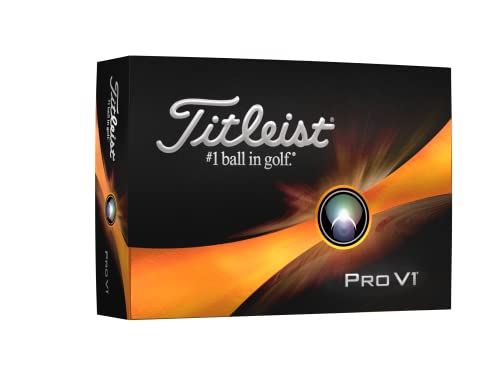
Titleist’s Pro V1 is the gold standard for many players, offering exceptional distance and consistency. Its advanced technology aids in achieving a penetrating flight and low spin for those long, straight drives you’re after. It’s not just about distance, though; these balls also provide superb greenside control.
Next up, Callaway’s Chrome Soft has made waves with its Graphene-infused Dual SoftFast Core. This high-tech design delivers an excellent energy transfer, leading to impressive ball speeds. You’ll notice that with a solid swing, this ball can soar through the air with ease, potentially edging out competitors on those long par 5s.
For a ball that’s all about speed, TaylorMade’s TP5x grabs the spotlight. The five-layer construction is engineered to perform with every club, maximizing launch angles and reducing drag. If you’re a high swing-speed player, the TP5x is tailored to make the most of your power.
Lastly, Bridgestone’s Tour B series offers options like the X and XS, touted by the likes of Bryson DeChambeau for their distance capabilities. The smart urethane cover reacts to your swing speed, optimizing performance whether you’re booming it off the tee or pinpointing an approach shot.
| Brand | Model | Core Technology | Cover Material |
|---|---|---|---|
| Titleist | Pro V1 | ZG Process Core | Urethane Elastomer |
| Callaway | Chrome Soft | Graphene-Infused Dual SoftFast Core | Urethane |
| TaylorMade | TP5x | 5-Layer Construction | Soft-Tough Urethane |
| Bridgestone | Tour B X/XS | Gradational Compression Core | Smart Urethane |
Conclusion
So you’ve seen how various factors like core construction and cover material play pivotal roles in the distance your golf ball can achieve. Whether you’re reaching for a Titleist, Callaway, TaylorMade, or Bridgestone, remember that it’s not just about the brand. It’s about finding the perfect match for your swing speed and the course conditions you’ll be facing. Armed with this knowledge, you’re now ready to make an informed choice and watch your golf ball soar further down the fairway. Happy golfing!
Frequently Asked Questions
What primary factors affect golf ball distance?
The main factors that influence golf ball distance include the construction of the ball, the material of the core (rubber or synthetic), the number of layers in the ball, the cover material (like Surlyn® or urethane), as well as the course conditions and the golfer’s swing speed.
How does the core composition of a golf ball impact its performance?
The core composition of a golf ball, whether rubber or synthetic, affects its distance potential. Rubber cores generally provide more elasticity, while synthetic cores offer a range of performance characteristics based upon their design.
Why do multi-layer golf balls benefit skilled golfers more?
Multi-layer golf balls offer more control and are beneficial for skilled golfers because they can manipulate ball flight and performance attributes, such as spin, more effectively than with single-layer balls.
How does the cover material of a golf ball affect its distance and control?
The cover material, such as Surlyn® or urethane, influences a golf ball’s distance and control. Surlyn® covers tend to make the ball more durable and provide longer distances, while urethane covers offer better control and feel, especially around the greens.
Should players consider course conditions when choosing a golf ball?
Yes, players should consider course conditions when selecting a golf ball because certain ball designs perform better in specific environments, such as wet conditions or courses with lots of rough.
What should golfers with slower swing speeds look for in a golf ball?
Golfers with slower swing speeds should look for golf balls designed to maximize distance at lower swing speeds, often featuring softer compression cores and aerodynamic dimple designs.
Which popular golf ball brands are known for maximum distance?
Popular golf ball brands known for maximum distance include Titleist, Callaway, TaylorMade, and Bridgestone, each with various models designed to enhance distance.
What kind of information about core technology and cover material is provided by golf ball brands?
Golf ball brands typically provide information on their core technology, like the composition and compression, and cover material, such as the durability and spin control attributes, highlighting the expected performance and distance capabilities.